
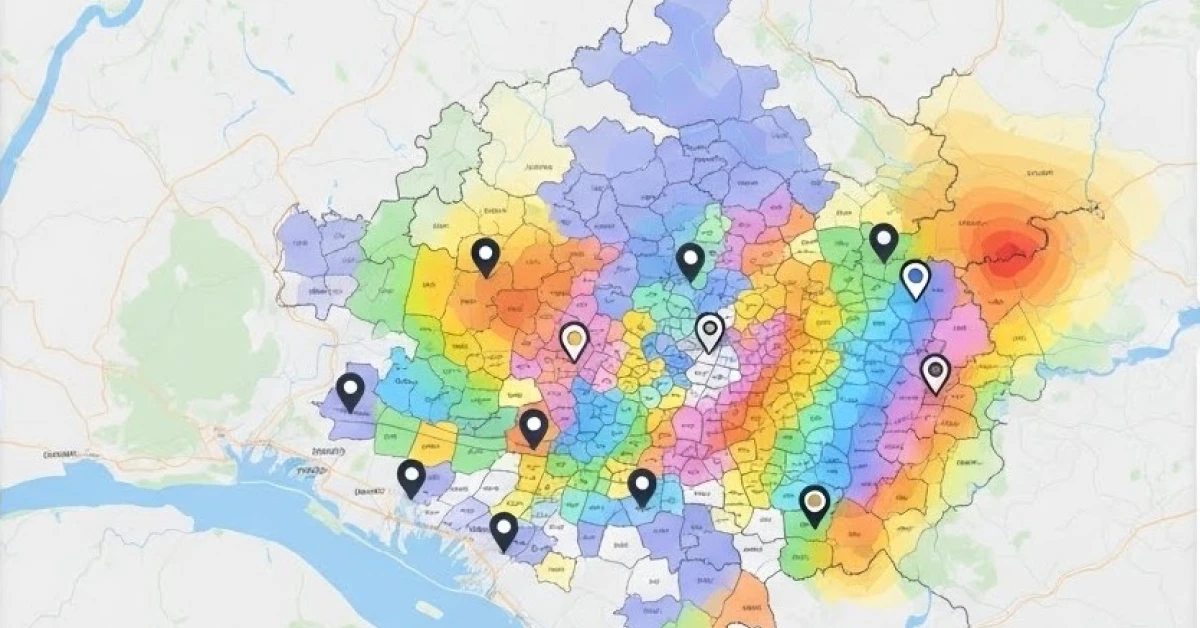
Today’s field sales environment requires more than intuition—sales territory design has become a strategic discipline that shapes revenue, efficiency, customer experience, and team morale. When territories are structured correctly, sales reps work smarter, travel less, close more, and maintain stronger relationships. When designed poorly, inconsistent coverage, duplicated work, and misaligned goals quickly erode performance.
Organizations that adopt a data-driven approach to territory planning consistently outperform those relying on outdated maps, legacy spreadsheets, or static yearly plans.
This guide provides a streamlined, modern approach: how to identify poor territory structure, how to build a strong territory model in 10 actionable steps, and how to use insights and automation to sustain long-term field success.
1. How to Recognize When Your Sales Territory Design Isn’t Working
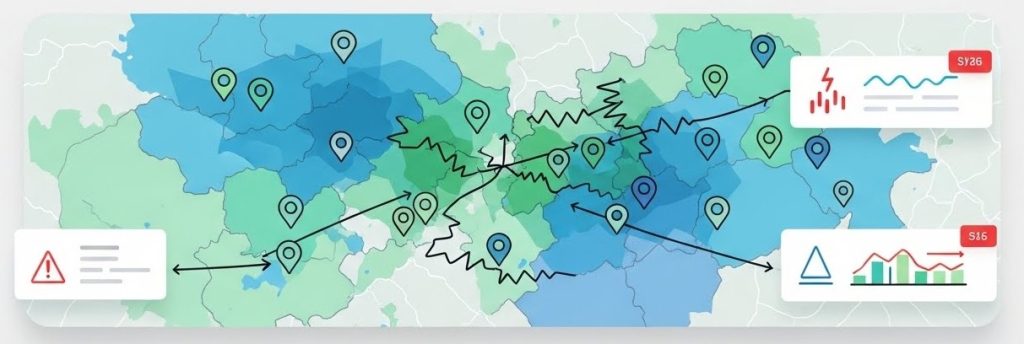
Even strong, high-performing sales organizations experience hidden inefficiencies when territories aren’t designed with clear logic and real customer data. These issues often show up gradually—through stalled pipelines, uneven workloads, or frustrated reps—making it critical for managers to know the early warning signs. Below are the clearest indicators that your sales territory design needs to be reassessed.
1.1 Misaligned Targeting and Prospecting
Misalignment between reps and the customers they engage is one of the earliest signs of weak territory structure. When territories do not reflect your ideal customer profile (ICP), reps spend too much time chasing the wrong accounts. This often results in:
- Prospects with low or no buying potential
- Accounts that are too small or geographically scattered
- Customers outside the company’s target industries
- Opportunities requiring product knowledge the rep may not have
Field sales teams also notice inconsistent lead quality within their assigned regions—some reps receive a flow of high-fit leads, while others struggle with low-potential accounts. This imbalance leads to wasted effort, reduced conversion rates, and lost confidence in the territory model.
Additionally, reps may report feeling unsure about where to focus their time. If your team is frequently asking, “Which accounts matter most?” or “Where should I start my week?”, it’s usually a sign that the territory design is not guiding their decision-making.
1.2 Operational Inefficiencies in the Field
Weak territory planning also creates day-to-day operational friction—problems that directly impact productivity and customer experience. Common indicators include:
- Multiple reps visiting or calling the same accounts
- Overlapping outreach within the same neighborhoods or regions
- Repeated follow-ups missed because ownership is unclear
- Under-served areas where customers rarely receive visits
- Reps complaining about “zig-zag” or inefficient travel routes
These inefficiencies are especially visible in teams that still rely on outdated maps or static spreadsheets. Without smart boundaries and clear account ownership, field activities become reactive instead of strategic.
Field leaders may also notice inconsistent visit frequency across accounts. High-value accounts sometimes get less attention than lower-value ones simply because the territory boundaries do not match real demand. Over time, this leads to weaker relationships, slower response times, and more customer dissatisfaction.
1.3 Territory Imbalance and Workforce Challenges
Unbalanced territories create deeper organizational issues that affect performance, morale, and retention. Symptoms often include:
- Long, exhausting travel loops due to poorly drawn boundaries
- Reps in high-opportunity regions consistently outperforming others
- Lower-opportunity regions leading to frustration or disengagement
- Burnout in overloaded territories where reps cannot keep up
- Difficulty hiring or retaining reps for areas perceived as “unfair”
Managers may also see compensation disputes or quota complaints emerge more frequently—both are signs that the territory model is not distributing opportunity equitably.
In the long run, uneven territories create a divide between reps who “have it easy” and those who feel like they’re set up to fail. This impacts teamwork, collaboration, and overall culture.
A fair and data-informed territory design ensures:
- Clear expectations
- Balanced workloads
- Predictable earning potential
- Better job satisfaction
- Stronger long-term retention
This balance is essential for field sales teams looking to scale efficiently and sustainably.
2. Essentials of Modern, Insight-Driven Territory Management

Strong sales territory design requires more than drawing boundaries on a map. Modern field operations rely on a combination of data intelligence, automation, and real-time performance monitoring to ensure that every territory supports both rep productivity and business growth. When these elements work together, field teams make better decisions, move faster, and stay aligned with organizational goals.
Below are the core components that today’s field sales professionals expect from a modern, insight-driven territory management approach.
2.1 Data-Driven Execution
Effective territory management begins with data—not assumptions or legacy boundaries. Field sales teams need access to information such as:
- Lead and customer density
- Buying behaviors and historical performance
- Product demand trends
- Regional revenue potential
This allows managers to assign territories based on real opportunity, not guesswork. Reps benefit too: when territories reflect actual market potential, they spend more time on high-value actions and less time trying to “make the region work.”
2.2 Real-Time Visibility
Field sales thrives on clarity. Without real-time visibility into what’s happening across territories, teams operate blind. Modern systems give managers and reps instant access to:
- Completed and upcoming visits
- Route patterns
- Rep activity performance
- Territory coverage gaps
This real-time feedback loop allows teams to adjust plans on the fly. If a high-value customer hasn’t been visited recently, or if a region is falling behind on coverage, leaders can intervene immediately rather than discovering issues weeks later.
For reps, this visibility reduces uncertainty and helps them plan each day more strategically.
2.3 Automation & Efficiency
Automation has become a critical part of modern field operations. Structures that once required manual planning—such as scheduling visits, building routes, or preparing reports—can now be generated instantly.
Examples of automation that improve territory management include:
- Auto-generated optimized routes
- Automated visit planning workflows
- Smart reminders and follow-up alerts
- Automatic data capture and reporting
These tools reduce administrative burden and give reps more time to focus on what matters most: meeting customers and closing deals.
2.4 Analytics for Better Decisions
Territories shouldn’t be redesigned once a year and forgotten. Analytics allow managers to continuously evaluate territory performance and adjust when needed. Key analytics might include:
- Win rates and deal velocity by region
- Visit frequency and coverage consistency
- Average order value and customer lifetime value
- Travel time vs. selling time
- Rep workload balance
These insights help leaders identify whether territories remain fair, productive, and aligned with shifting market dynamics. When decisions are backed by analytics instead of intuition, territory design becomes more accurate—and far more scalable.
When data, visibility, automation, and analytics come together, sales organizations create a future-proof territory management model. This integrated approach ensures that territories stay balanced, reps stay efficient, and field teams can adapt as markets evolve.
3. A Practical 10-Step Framework for Effective Sales Territory Design

Building high-performing territories requires a clear, structured approach—not ad-hoc decisions or legacy boundaries. A strong territory model aligns opportunity with capacity, prioritizes high-value accounts, and ensures reps spend their time where it matters most. Below is a streamlined and actionable 10-step framework that field sales leaders can apply to design fair, efficient, and data-backed territories.
1. Set clear sales objectives
Start by defining what success looks like: revenue growth, entering new regions, improving visit frequency, or expanding key verticals. Territory design must directly support these goals.
2. Review rep capacity and performance
Assess each rep’s strengths, experience, workload, and historical results. Territories should be assigned according to capability—not just geography.
3. Define your ideal customer profile (ICP)
Clarify which customers bring the most value. Map where these high-fit prospects and accounts are concentrated to ensure territories align with real demand.
4. Use geographic and business intelligence
Factor in population density, lead distribution, accessibility, traffic patterns, and local market dynamics to build realistic boundaries.
5. Visualize existing and potential leads
Use mapping tools to identify hot spots, underserved pockets, and regions with high growth potential. This helps prevent blind spots and ensures coverage consistency.
6. Segment leads by value and likelihood
Balance territories based on both volume and revenue potential. A region with fewer but high-value accounts can be equal to one with a higher number of low-value leads.
7. Match reps to territory complexity
Top performers should manage denser or more strategic regions, while newer reps start with simpler territories. This creates fairness and supports development.
8. Track territory performance with defined metrics
Monitor KPIs such as win rate, deal velocity, coverage frequency, pipeline health, and average deal size. These indicators reveal whether the design is working.
9. Use activity data to ensure workload fairness
Analyze time spent traveling vs. selling, visit volume, follow-up speed, and route efficiency. Territories should enable productivity—not make it harder.
10. Gather rep input before finalizing territories
Reps understand on-the-ground realities better than anyone. Their insights help validate data, uncover hidden challenges, and strengthen adoption.
When executed together, these steps ensure that every territory is grounded in real customer value, balanced workloads, and clear business logic—creating a stronger, more scalable foundation for field sales success.
4. The Strategic Impact of Strong Sales Territory Design

When sales territories are designed with structure, fairness, and real customer data, the impact reaches every corner of the organization. Effective territory planning doesn’t just boost sales numbers—it enhances efficiency, morale, customer experience, and long-term scalability. Below are the core strategic benefits that field sales leaders consistently see when sales territory design is implemented effectively.
4.1 Increased Revenue Predictability
Balanced territories create a healthier and more stable pipeline. When opportunity is distributed fairly across regions, forecasting becomes more accurate, reps have a clearer path to quota, and sales leaders can project revenue with more confidence. Predictability also helps with planning hiring, budgeting, and resource allocation.
4.2 Better Daily Efficiency and Reduced Travel Time
Strong territory boundaries eliminate inefficient “zig-zag” travel patterns. Reps spend less time on the road and more time meeting customers, preparing follow-ups, and working strategic opportunities. This directly improves productivity and helps teams hit their activity goals with less effort.
4.3 Higher AOV and a Stronger Customer Experience
Consistent coverage leads to deeper customer relationships. When reps visit accounts frequently and predictably, they identify upsell and cross-sell opportunities earlier and solve issues before they turn into churn risks. This results in:
- Higher average order value
- More repeat purchases
- A better brand experience at the field level
Customers feel supported, and reps gain more trust and visibility in the region.
4.4 Motivated Teams and Healthier Retention Rates
Fair territories drive fair incentives. When reps feel they have an equal chance to succeed, motivation increases—and turnover decreases. High performers remain challenged, newer reps are given realistic territory scope, and teams operate with a stronger sense of confidence and ownership.
4.5 Organization-Wide Alignment
A clear territory structure doesn’t only support field sales—it strengthens cross-functional alignment. Marketing can target campaigns more effectively, operations can support demand more accurately, and finance can plan capacity with fewer surprises. Sales territory design becomes a shared blueprint that keeps teams coordinated and focused on the same goals.
5. The Evolving Future of Territory Planning
The future of sales territory design will be shaped by intelligent automation and predictive insights. Instead of creating territories annually, organizations are beginning to adopt continuous optimization—adjusting boundaries based on real-time performance, shifting demand, and customer behavior.
AI-assisted planning, dynamic route optimization, and centralized field platforms help teams act faster, improve accuracy, and achieve sustainable growth without increasing headcount.
Conclusion
Effective sales territory design is the backbone of modern field sales operations. When territories are aligned with customer value, balanced by performance capacity, and supported with real-time data, sales organizations experience faster revenue growth, higher rep productivity, stronger customer relationships, and greater operational efficiency.
The most successful teams treat territory planning as an ongoing strategic process—not a one-time assignment. With the right tools and insights, sales leaders can maintain fairness, adaptability, and long-term consistency across all regions.
If your sales team is ready to modernize your sales territory design with automation, real-time insights, intelligent routing, and fast, accurate field execution, FieldPie provides everything you need in one powerful platform.
From territory visualization to visit planning, KPI tracking, performance analytics, and end-to-end field operations, FieldPie helps you build smarter territories—and achieve stronger results.
👉 Supercharge your field sales strategy with FieldPie — book your demo today.